Hoodie Fabric Weight: 280, 320 or 350 g/m² — How to Choose
A practical guide to how hoodie fabric weight of 280–350 g/m² affects feel, season, print quality and price per piece for team orders.
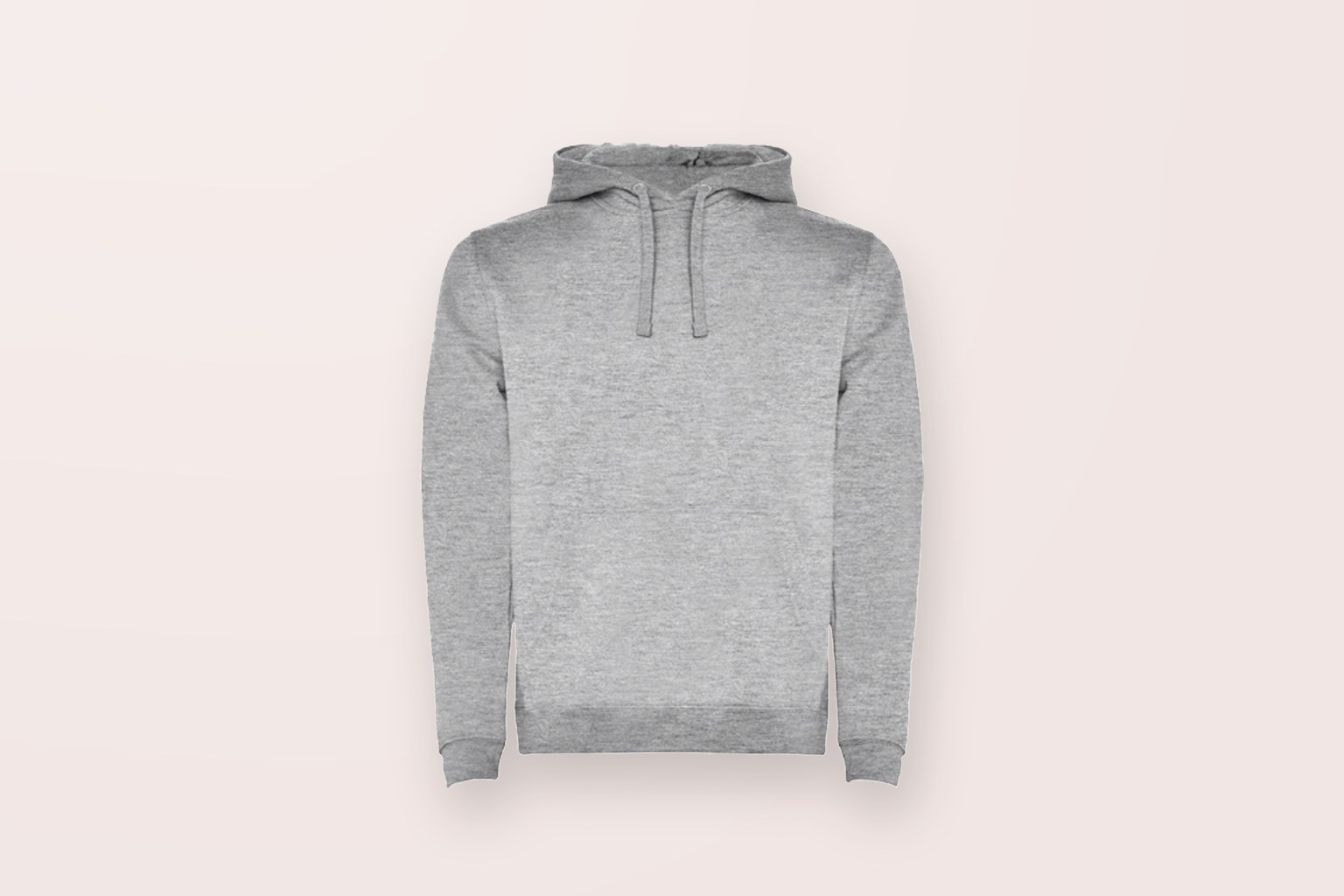
Hoodie fabric weight is the fabric's mass per square metre, and in practice the choice comes down to three levels: 280 g/m² is a universal option for all seasons, 320 g/m² is noticeably sturdier and holds its shape better, while 350 g/m² is the winter and outdoor-work class. The price difference between 280 and 350 g/m² is usually 20–40%, and it affects the choice of printing technology less than the fabric composition does. In our catalogue, the most commonly ordered models fall in the 240–300 g/m² range, starting from €10.58/pc for a 280 g/m² hoodie.
What 280, 320 and 350 g/m² mean
The number indicates the weight in grams of one square metre of fabric. The higher it is, the thicker and heavier the material — but that doesn't automatically mean better quality. Composition (the cotton-to-polyester ratio), knit type and inner finish all matter too.
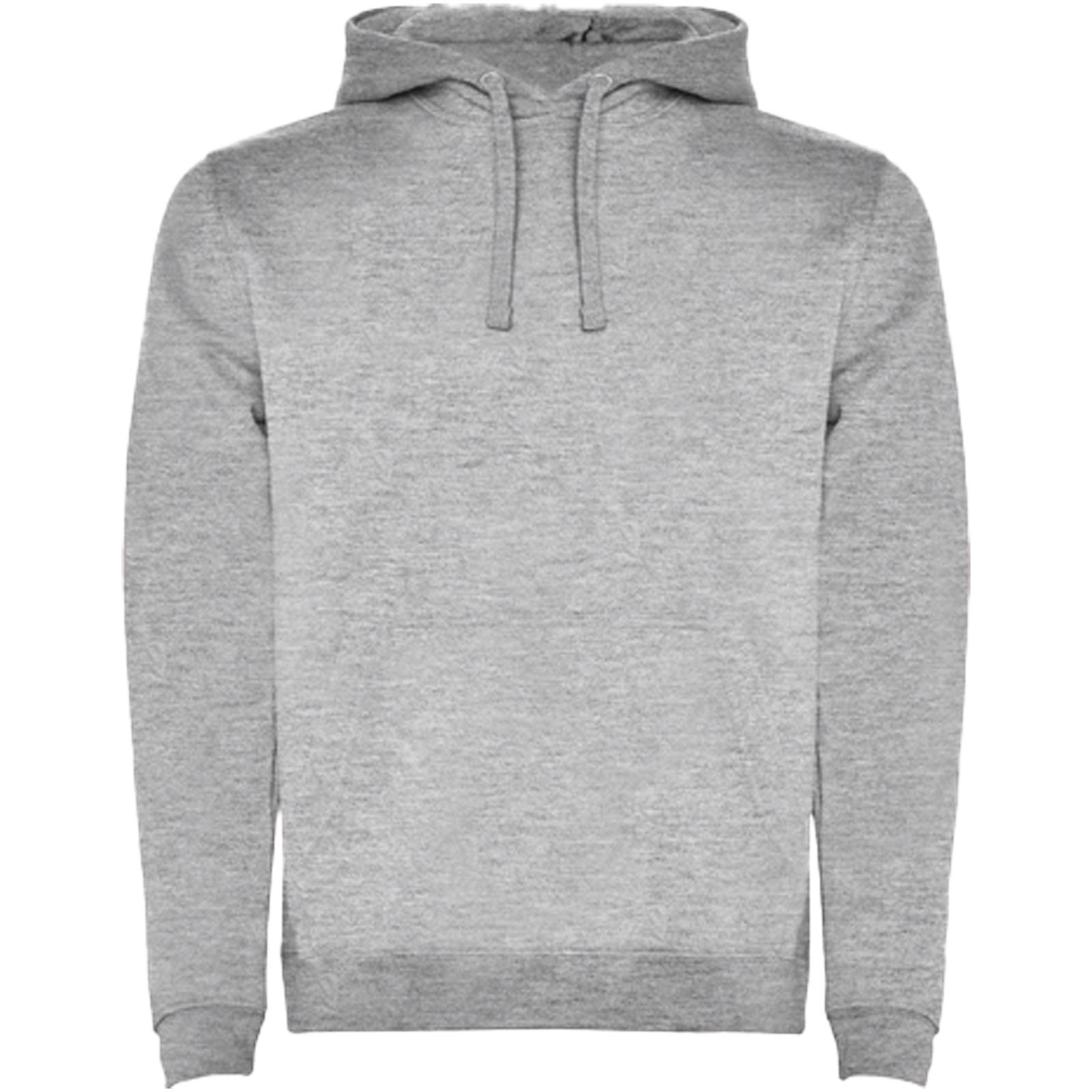
A typical hoodie has a brushed fleece inside, which provides warmth. If the inside isn't brushed, a 320 g/m² hoodie can feel cooler than a well-finished 280 g/m² one. That's why, when ordering for a team, it's worth comparing samples rather than just numbers.
Cotton vs polyester
An 80/20 cotton–polyester blend is the most common combination: a soft surface, while the polyester reduces shrinkage and pilling. Pure cotton (such as organic cotton models) feels nicer but takes longer to dry and shrinks more after the first wash. For sports clubs, where shirts are washed frequently, we usually recommend a higher polyester share.
Comparison by weight
| Weight | Feel and season | Best for | Printing | Indicative price at 50–100 pcs |
|---|---|---|---|---|
| 240 g/m² | Light, spring–summer, indoor use | Events, hotels, youth teams | Good for DTF and screen printing; embroidery may pull the fabric | from €16–18 |
| 280 g/m² | Universal, 3 seasons | Team shirts, cafés, schools, merch | Best balanced — suits all technologies | from €10–12 (cotton/PES) |
| 300–320 g/m² | Sturdy, holds shape, autumn–winter | Corporate wear, client gifts | Very good for embroidery and heavy screen printing | from €22–33 |
| 350 g/m² | Heavy, warm, for outdoor conditions | Construction, logistics, outdoor events | Embroidery, screen printing; DTF needs firmer pressing | from €28–40 |
Prices are indicative, excluding VAT and printing. The exact amount depends on quantity, number of colours and number of print locations.
How fabric weight affects printing
Screen printing. On thicker fabric (320–350 g/m²), the ink sinks in deeper, so dark garments need an extra white base layer. The result is durable, but setup costs rise with each colour. Screen printing pays off from around 30–50 pieces per design.
DTF transfer. Suitable for all weights and the most cost-effective full-colour option for 1 to 30 pieces. On a very soft, deeply brushed 350 g/m² fabric, expect a slightly more visible film outline, so for large areas we recommend split rather than solid dense backgrounds.
Embroidery. Thicker fabric is more embroidery-friendly — the design doesn't stretch the material. Our standard embroidery size is up to 90×90 mm, which works well for a chest logo.
Standard print locations for hoodies: left chest 110×90 mm, front or back up to 280×210 mm, sleeve 80×60 mm. For more on technologies, see the clothing printing section.
How to choose for a specific use
- A unified team uniform for all year round — 280 g/m². The widest colour range, lowest price per piece, comfortable to wear indoors.
- Client or employee gifts — 300–320 g/m². Heavier fabric feels premium in hand right away and looks more expensive; pairs well with embroidery.
- Outdoor work, winter events — 350 g/m². Expect a bulkier package and slightly higher delivery weight.
- Children's sizes — 280 g/m² is sufficient; heavier fabric is often uncomfortable for children.
In our hoodie category, the main focus is on 240–300 g/m² models, as these are in stock with a wide colour selection. 320 and 350 g/m² models are offered on a separate-request basis due to availability and lead times — let us know how many pieces and in what colour you need, and we'll check stock.
Examples from our catalogue
- Urban 280 g/m² men's hoodie – cotton-polyester blend, 36 colour options, suitable for DTF and screen printing, from €11.61/pc at 1 pc and from €11.49 at 100 pcs.
- Urban 280 g/m² women's hoodie – same fabric in a more fitted cut, 11 colours, from €11.61/pc.
- Urban 280 g/m² kids' hoodie – 20 colours, suitable for school and sports school teams, from €10.58/pc.
- Arora 300 g/m² unisex hoodie – thicker fabric that holds its shape, 11 colours, very good for embroidery, from €33.56/pc at 1 pc and from €30.74 at 100 pcs.
- Arora 300 g/m² unisex full-zip hoodie – full-length zip model for office and outdoor events, 10 colours, from €35.91/pc.
- Jasper 280 g/m² OCS organic cotton unisex hoodie – organic cotton, 9 colours, soft surface for screen printing, from €29.70/pc.
- Badet 280 g/m² two-tone unisex hoodie – two-colour design, 3 colour combinations, from €17.04/pc.
- Charon 240 g/m² unisex hoodie – the lightest option for indoor use and warmer seasons, 8 colours, from €17.76/pc.
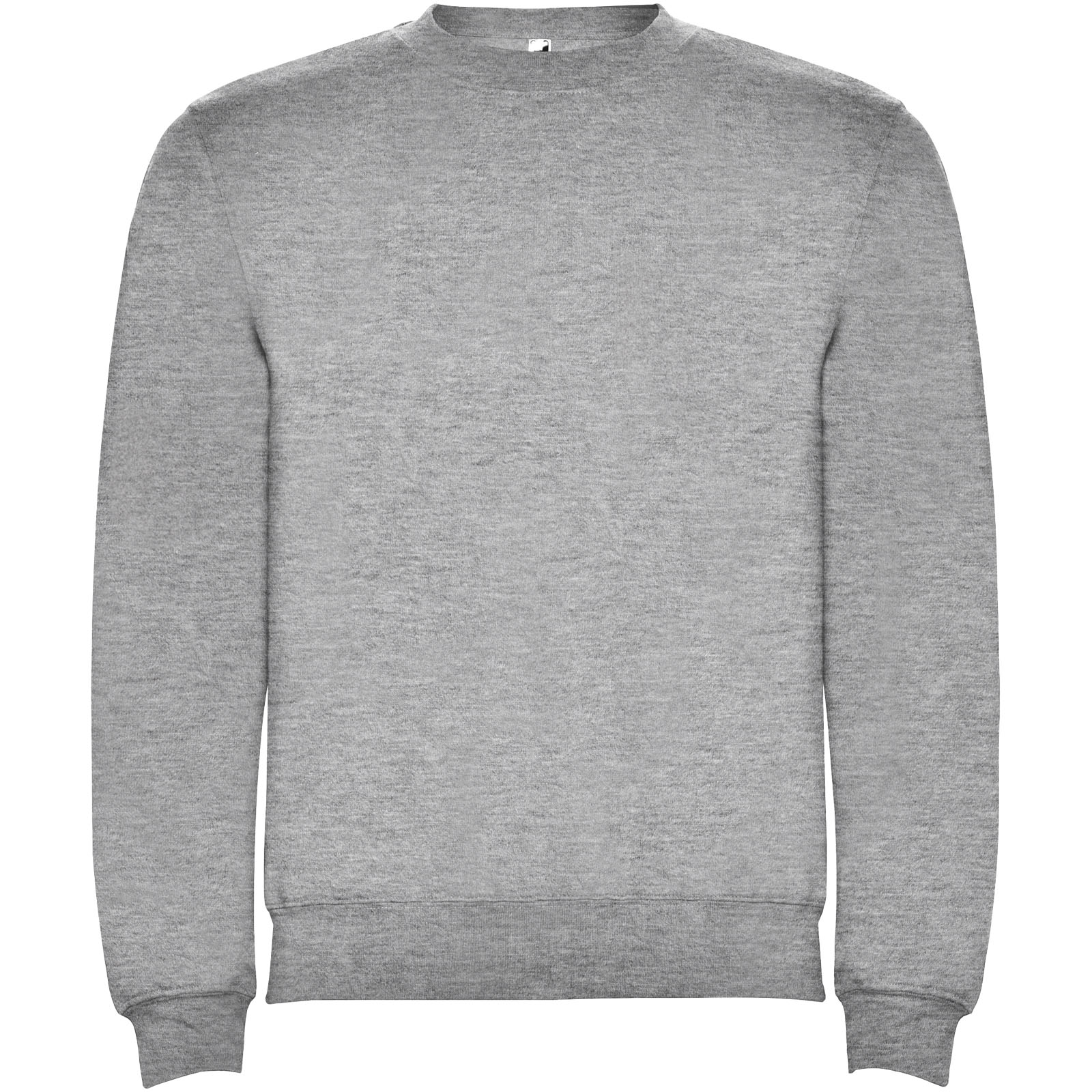
If your team also needs sweatshirts without a hood, check out the sweatshirt category — for example, the Clasica 280 g/m² unisex sweatshirt from €10.68/pc.
Frequently asked questions
What hoodie fabric weight is best suited for team shirts?
280 g/m². It works across three seasons, is available in the widest colour range and is the cheapest per piece. Choose 300–350 g/m² if the garment will be worn outdoors or given as a gift.
Does a thicker fabric mean better quality?
No. What matters more is the cotton-to-polyester ratio, the inner brushing and the seam quality. A well-finished 280 g/m² hoodie will outlast a cheap 350 g/m² model.
How many pieces should I order to get a good price per piece?
We also work from 1 piece, but setup costs get spread out starting from around 20–30 pieces. At 100 pieces, the garment price drops by a few per cent, while the printing price per piece drops significantly.
Can a full-colour image be printed on a 350 g/m² hoodie?
Yes, using DTF transfer or screen printing. For thick fabric, we recommend avoiding very thin elements under 1 mm and large solid film areas.
How long does an order take?
Printed garments usually take 6–10 business days: production 4–7 business days depending on quantity, plus delivery 2–3 days. Urgent jobs are assessed separately.
What files are needed for printing?
Vector graphics (.ai, .eps, .pdf, .svg) in CMYK mode; for raster files, at least 300 dpi at actual size. The artwork must be approved by email before production.
Email info@attaprint.lv, call, or message us on WhatsApp at +371 25776699, letting us know your preferred fabric weight, colour, size breakdown and print locations — we'll prepare a quote with pricing, printing costs and lead time within one business day. On request, we can also add a 3D preview with your logo.
FAQ
What hoodie fabric weight is best suited for team shirts?
280 g/m². It works across three seasons, is available in the widest colour range and is the cheapest per piece. Choose 300–350 g/m² if the garment will be worn outdoors or given as a gift.
Does a thicker fabric mean better quality?
No. What matters more is the cotton-to-polyester ratio, the inner brushing and the seam quality. A well-finished 280 g/m² hoodie will outlast a cheap 350 g/m² model.
How many pieces should I order to get a good price per piece?
We also work from 1 piece, but setup costs get spread out starting from around 20–30 pieces. At 100 pieces, the garment price drops by a few per cent, while the printing price per piece drops significantly.
Can a full-colour image be printed on a 350 g/m² hoodie?
Yes, using DTF transfer or screen printing. For thick fabric, we recommend avoiding very thin elements under 1 mm and large solid film areas.
How long does an order take?
Printed garments usually take 6–10 business days: production 4–7 business days depending on quantity, plus delivery 2–3 days. Urgent jobs are assessed separately.
What files are needed for printing?
Vector graphics (.ai, .eps, .pdf, .svg) in CMYK mode; for raster files, at least 300 dpi at actual size. The artwork must be approved by email before production.