Printed T-shirts: what 150, 160 and 180 g/m² mean
Fabric weight shows the mass per square metre: 135–150 g/m² is a thin T-shirt, 155–175 g/m² is universal, 180–200 g/m² is dense and durable. A guide with a comparison table and prices.
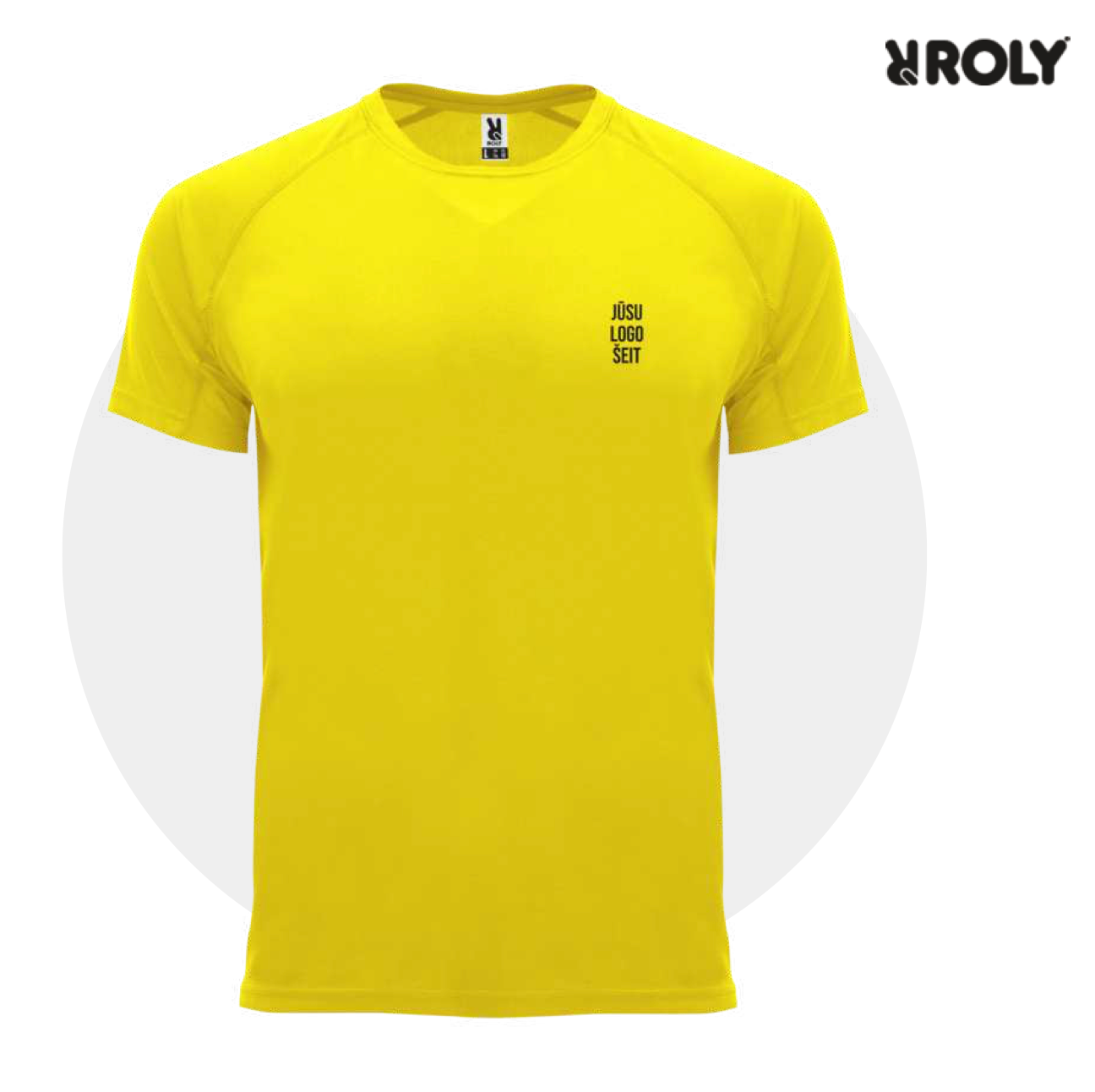
Printed T-shirts in Latvia are most often ordered in three weight groups: 135–150 g/m² (thin, the lightest option), 155–175 g/m² (universal everyday T-shirt) and 180–200 g/m² (dense, durable fabric). Fabric weight means the mass of the fabric per square metre — the higher the number, the denser and less see-through the fabric, and the better it holds its shape after washing, but also the higher the price and the warmer it feels in summer. In practice, the difference between a 150 and a 180 g/m² T-shirt is around 30–40 grams in weight and a clearly noticeable difference in thickness.
What fabric weight tells you about a T-shirt
Fabric weight (g/m²) is only the weight of the fabric, not a quality rating. A 150 g/m² T-shirt made from well-spun cotton can feel nicer than a poor-quality 190 g/m² fabric. Still, there are a few patterns that hold true in practically every order:
- Opacity. Below 150 g/m², light colours (white, light grey, yellow) can be slightly see-through.
- Shape retention. A 180–200 g/m² T-shirt stretches less around the neckline after 20 washes.
- Print quality. A denser fabric gives a smoother surface for screen printing and DTF — edges look sharper and colour more even.
- Breathability. Lightweight 135–150 g/m² T-shirts are better suited to summer events and sports.
Cotton or polyester
Cotton T-shirts (Beagle, Stafford, Capri, Breda, Atomic) are the standard choice for company, café and school orders. Polyester sports T-shirts (Bahrain, Imola, Montecarlo) sit in the 135–150 g/m² range, since technical fabric is inherently lighter — they're chosen by sports clubs and race organisers, and are better suited to sublimation or DTF rather than classic screen printing with thick inks.
Comparing fabric weights with models from our catalogue
| Fabric weight | Feel and use | Models from our catalogue |
|---|---|---|
| 135 g/m² polyester | Light, quick-drying, for sports and races | Bahrain 135 g/m² men's and women's sports T-shirt, Imola 135 g/m² |
| 150 g/m² | Thin, for summer events, large quantities | Atomic 150 g/m² unisex (cotton), Montecarlo 150 g/m² sports (polyester) |
| 155–160 g/m² | Everyday standard, good price–quality ratio | Beagle 155 g/m² men's, Nanaimo 160 g/m² men's, Nanaimo women's |
| 170–175 g/m² | Denser, drapes well, organic cotton option | Capri 170 g/m² women's, Breda 175 g/m² organic cotton |
| 190–200 g/m² | Durable, for workwear and team clothing | Stafford 190 g/m² men's T-shirt, Calgary 200 g/m² polo shirt |
| 300 g/m² | Hoodie, for autumn–winter sets | Arora 300 g/m² unisex hoodie |
Colour choice varies by model: Beagle is available in 262 colours, Stafford in 260, Capri in 204, Nanaimo in 121, Breda in 102, Atomic in 83. The sports models Bahrain and Montecarlo offer 150 and 93 colours respectively. If you need to match a specific brand colour, a wider palette usually means a better chance of finding a close shade without a special order.
How fabric weight affects the choice of printing technology
- Screen printing — cost-effective from 30–50 pcs, 1–4 colours. Works best on 155–200 g/m² cotton. On very thin fabric, thick ink can make the print feel stiff.
- DTF (film transfer) — suitable from 1 piece, for full-colour images and photos. Works for both cotton and polyester sports T-shirts.
- Sublimation — only for white or light-coloured polyester T-shirts (Bahrain, Imola, Montecarlo); the colour is absorbed into the fibre and can't be felt by touch.
- Embroidery — requires a denser fabric, so on a T-shirt we offer it from 180 g/m² upwards, or on a polo shirt or hoodie (Calgary 200 g/m², Arora 300 g/m²).
For more on technologies and the ordering process, see the clothing printing page and the T-shirts section.
Indicative prices
The figures below are indicative, excl. VAT, and include the T-shirt together with a one-sided print. The exact price depends on quantity, number of colours, print size and the specific model.
| Quantity | 150 g/m² T-shirt + 1-colour print | 180–190 g/m² T-shirt + 1-colour print | Full-colour DTF print |
|---|---|---|---|
| 1–9 pcs | from EUR 14 | from EUR 17 | from EUR 16 |
| 10–49 pcs | from EUR 10 | from EUR 12 | from EUR 12 |
| 50–99 pcs | from EUR 8 | from EUR 9.50 | from EUR 10 |
| 100+ pcs | from EUR 6.50 | from EUR 8 | on request |
A second print location (back, sleeve) usually adds EUR 1.50–3 per piece. The screen printing setup fee per colour is a one-off cost, so for large quantities it's barely noticeable.
How to choose for a specific purpose
- One-day event T-shirts, large quantities — 150 g/m² cotton, for example Atomic 150 g/m² unisex.
- Staff T-shirts for a café or shop — 155–175 g/m²: Beagle 155 g/m², Nanaimo 160 g/m², for women Capri 170 g/m².
- T-shirts worn daily and washed often — Stafford 190 g/m² or the Calgary 200 g/m² polo shirt.
- For a sports club and training — Bahrain 135 g/m² or Montecarlo 150 g/m² polyester.
- Eco-friendly option — Breda 175 g/m² made from organic cotton.
Files and deadlines
Please send logos as vector files (.ai, .eps, .pdf) in CMYK or Pantone colours; for raster files, at least 300 dpi at the actual print size is recommended. The standard production time is 5–10 business days after artwork approval, depending on model availability, printing technology and quantity. Urgent jobs can be arranged separately. For our other printing services — stickers, posters, business cards — see the services section.
Frequently asked questions
What's the best fabric weight for printed T-shirts?
The most universal choice is 155–175 g/m² cotton: the fabric isn't see-through, holds its shape well, and prints look clean on it. For summer events with large quantities, 150 g/m² is enough; for everyday workwear, 190 g/m² is a better fit.
Will a print hold up worse on a thin 135–150 g/m² T-shirt?
It will hold up fine if the right technology is chosen. On thin polyester sports T-shirts, sublimation or DTF works better than thick screen-printing ink, which can make the printed area feel stiff.
Can I order just one T-shirt?
Yes. We also work with DTF printing from 1 piece. Screen printing becomes cost-effective from 30–50 pieces, as that's when the stencil setup costs get spread out.
How many colours can I choose for a T-shirt?
It depends on the model: Beagle 155 g/m² is available in 262 colours, Stafford 190 g/m² in 260, Capri 170 g/m² in 204, Nanaimo 160 g/m² in 121 colours. We check exact availability in specific sizes at the time of ordering.
How long should I expect from order to delivery?
Usually 5–10 business days after artwork approval. The timeline depends on model and size availability, printing technology and quantity; urgent jobs are possible by arrangement.
Email us at info@attaprint.lv or call or message us on WhatsApp at +371 25776699 — let us know the model, quantity, sizes and print locations, and we'll prepare a quote within one business day.
FAQ
What's the best fabric weight for printed T-shirts?
The most universal choice is 155–175 g/m² cotton: the fabric isn't see-through, holds its shape well, and prints look clean on it. For summer events with large quantities, 150 g/m² is enough; for everyday workwear, 190 g/m² is a better fit.
Will a print hold up worse on a thin 135–150 g/m² T-shirt?
It will hold up fine if the right technology is chosen. On thin polyester sports T-shirts, sublimation or DTF works better than thick screen-printing ink, which can make the printed area feel stiff.
Can I order just one T-shirt?
Yes. We also work with DTF printing from 1 piece. Screen printing becomes cost-effective from 30–50 pieces, as that's when the stencil setup costs get spread out.
How many colours can I choose for a T-shirt?
It depends on the model: Beagle 155 g/m² is available in 262 colours, Stafford 190 g/m² in 260, Capri 170 g/m² in 204, Nanaimo 160 g/m² in 121 colours. We check exact availability in specific sizes at the time of ordering.
How long should I expect from order to delivery?
Usually 3–10 business days. The timeline depends on model and size availability, printing technology and quantity; urgent jobs are possible by arrangement.