Print durability on T-shirts: how many washes does it last
How long do screen printing, DTF and embroidery last on a T-shirt: realistic wash counts, care rules and how to choose a technology based on quantity.
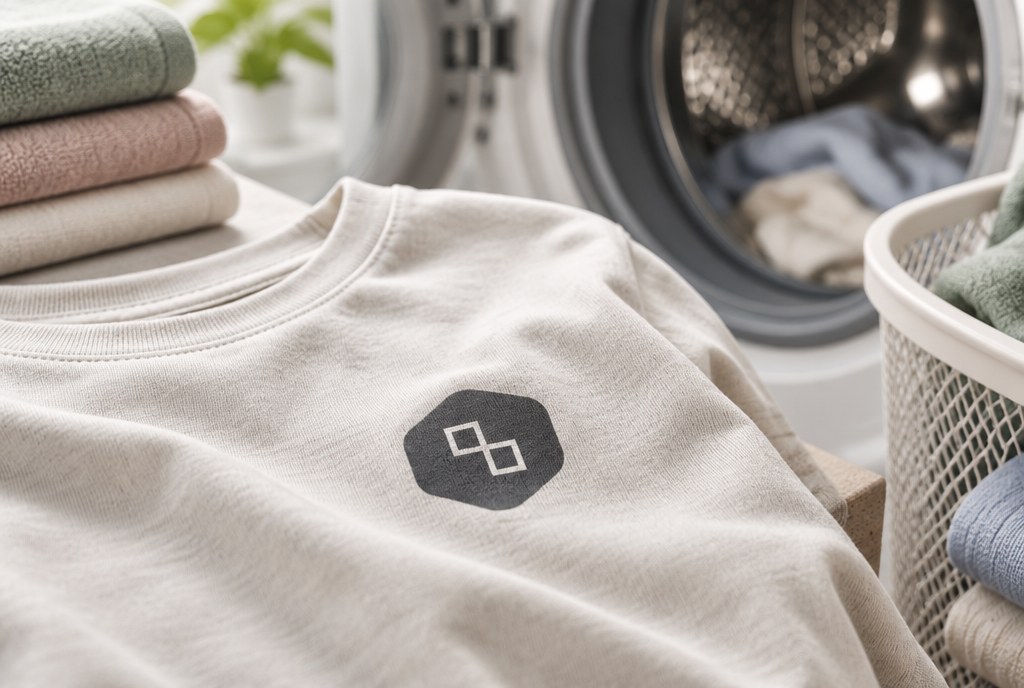
Print durability on a T-shirt depends mainly on the technology: properly cured screen printing lasts 50–100 washes at 30–40°C, DTF transfer — 30–50 washes on average, while embroidery practically outlasts the garment itself, since it's thread, not a layer of ink. Sublimation on light-coloured polyester doesn't fade at all, because the dye penetrates the fibre, but it can only be used on synthetics. These figures apply to a cotton or cotton/polyester T-shirt washed inside-out, without bleach and without a tumble dryer.
How each technology holds up on fabric
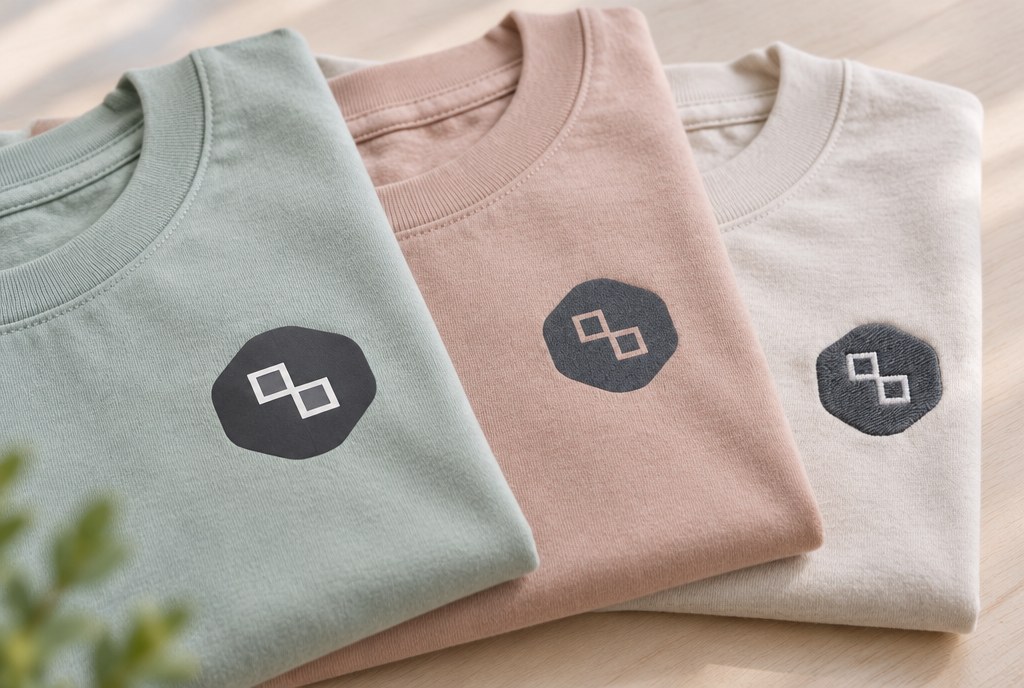
Screen printing is a layer of ink that's heat-cured (polymerised) onto the surface of the fabric. If the curing temperature and time are correct, the ink becomes flexible and bonds with the fibre — which is why sports club shirts with screen printing often still look good after two seasons. The weak point is cracking, if the shirt is constantly tumble-dried or ironed directly over the print.
DTF transfer is a thin, flexible film with adhesive, pressed on at 150–160°C. It holds full-colour images and photographs with no limit on the number of colours, but the edges can start to lift over time if the shirt is washed at 60°C or put in a tumble dryer.
Embroidery isn't a print at all, but thread sewn into the fabric. Polyester embroidery thread doesn't wash out or change colour; the only risk is mechanical tearing or wear of the fabric around it. For embroidery we use an area of up to 90×90 mm — well suited for a chest logo, polo shirts, jackets and caps.
Sublimation only works on polyester and light colours. The print isn't noticeable to the touch and doesn't wear off, so we use it for sportswear and textile items where breathability matters.
Comparison table
| Technology | Wash cycles (30–40°C) | Fabric | Number of colours | Suitable quantity |
|---|---|---|---|---|
| Screen printing | 50–100 | Cotton, blended fabrics | 1–4 (separate stencil for each) | From 30–50 pcs |
| DTF transfer | 30–50 | Cotton, polyester, blended | Full-colour, unlimited | From 1 pc |
| Embroidery | Lasts as long as the shirt | Denser fabrics, polos, jackets, caps | 1–8 thread colours | From 10–20 pcs |
| Sublimation | Doesn't fade | Light polyester only | Full-colour | From 1 pc |
These figures are real-life observations, not a laboratory guarantee: the quality of the shirt itself matters a lot too. On a thin 140 g/m² shirt, the print will look worn faster because the fabric itself shrinks and pills; on 180–200 g/m² cotton the result is more stable.
Care that makes the difference between 30 and 80 washes
- Wash for the first time no sooner than 24 hours after receiving the print.
- Wash inside-out, at 30–40°C, on a gentle cycle.
- Don't use bleach or chlorine-based stain removers.
- Don't use a tumble dryer — it's the fastest way to damage both screen printing and DTF.
- Iron from the inside or through a cloth; never directly over the print.
- Don't spin at maximum speed if the print is large and dense.
For work clothing that's industrially washed at 60°C and above, we recommend embroidery — it's the only option that reliably withstands dozens of such cycles.
How to choose based on your project
If you need 10 shirts for a team with a full-colour image, DTF is the most cost-effective. If you need 200 shirts for an event with a one- or two-colour logo, screen printing is both cheaper per piece and more durable. If a shirt or polo is worn every day at work, embroidery looks more professional and doesn't crack.
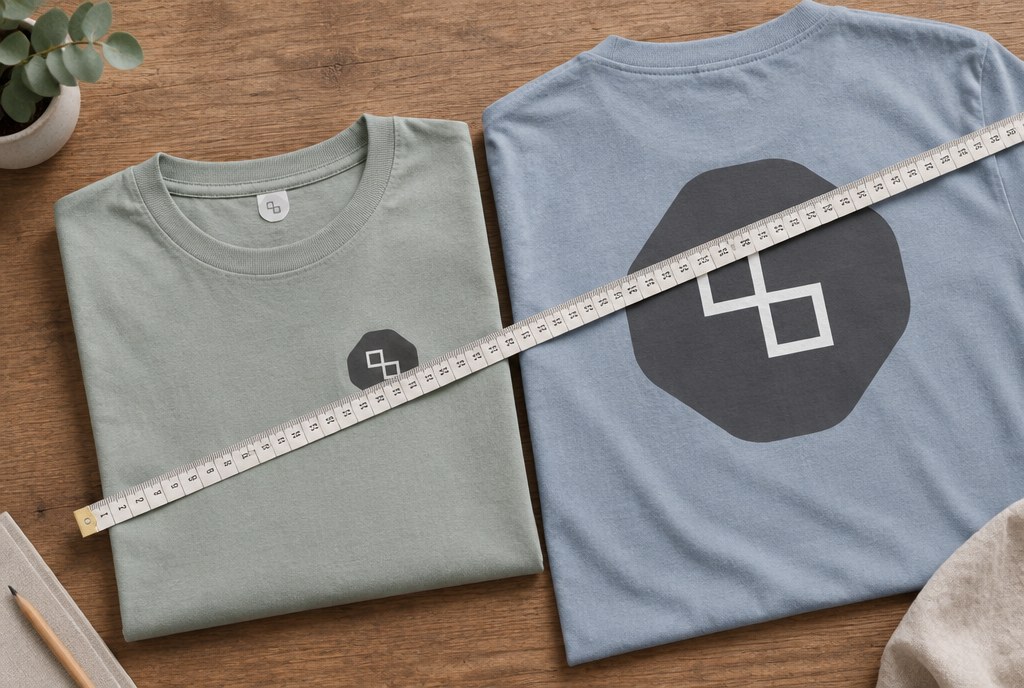
Standard print locations we work with: left chest 110×90 mm, front and back up to 280×210 mm, sleeve 80×60 mm, embroidery up to 90×90 mm. A larger area means a denser layer of ink, so care rules matter even more for back prints. For more on available technologies, see the garment printing section, and browse the actual models in the T-shirts and hoodies categories. Previous projects can be viewed in our work.
Prices are indicative and excl. VAT: a T-shirt with single-colour screen printing at a quantity of 100 pcs usually comes to around 8 EUR/pc, DTF printing in A5 format at a quantity of 20 pcs — from around 4 EUR/pc in addition to the shirt price. The exact price depends on quantity, print area and number of colours.
Examples from our catalogue
A few examples from our catalogue with prices excluding printing:
- Beagle 155 g/m² men's short-sleeve T-shirt – Cotton, 36 colour options, price from 2.22 EUR/pc, at 1 pc,
- Stafford 190 g/m² men's short-sleeve T-shirt – Cotton, 41 colour options, price from 3.06 EUR/pc, at 1 pc,
- Star 200 g/m² men's short-sleeve polo shirt – Cotton, 34 colour options, price from 5.81 EUR/pc, at 1 pc,
- Capri 170 g/m² women's short-sleeve T-shirt – Cotton, 34 colour options, price from 2.90 EUR/pc, at 1 pc,
Frequently asked questions
How many washes does DTF printing on a T-shirt withstand?
On average 30–50 washes at 30–40°C, if the shirt is washed inside-out and not tumble-dried. With a tumble dryer and 60°C washing, this number can drop to 15–20.
Which is more durable — screen printing or DTF?
Screen printing is usually more durable (50–100 washes) and more economical for large quantities, but it only works well with a limited number of colours. DTF is better value for full-colour images and small quantities starting from 1 piece.
Can embroidery come loose or fray?
Polyester thread doesn't wash out or change colour. Problems only occur if the fabric around the embroidery is thin or heavily worn; for denser polo shirts and jackets this practically never happens.
Can a printed shirt be washed at 60°C?
We don't recommend this for screen printing and DTF — the adhesive and ink layer age faster. Embroidery is suitable for 60°C and industrial washing.
How long does it take to receive printed shirts?
Printed garments are usually ready within 6–10 business days (production 4–7 business days depending on quantity, plus 2–3 days delivery). Urgent orders can be arranged by agreement.
What format should the logo be submitted in?
Vector graphics (.ai, .eps, .pdf, .svg) in CMYK are preferred; for raster images — 300 dpi at the actual print size. We send the artwork for approval by email before production.
Write to info@attaprint.lv or call or message us on WhatsApp at +371 25776699 — tell us the quantity of shirts, size breakdown and print location, and we'll prepare a quote with a technology recommendation within one business day.
FAQ
How many washes does DTF printing on a T-shirt withstand?
On average 30–50 washes at 30–40°C, if the shirt is washed inside-out and not tumble-dried. With a tumble dryer and 60°C washing, this number can drop to 15–20.
Which is more durable — screen printing or DTF?
Screen printing is usually more durable (50–100 washes) and more economical for large quantities, but it only works well with a limited number of colours. DTF is better value for full-colour images and small quantities starting from 1 piece.
Can embroidery come loose or fray?
Polyester thread doesn't wash out or change colour. Problems only occur if the fabric around the embroidery is thin or heavily worn; for denser polo shirts and jackets this practically never happens.
Can a printed shirt be washed at 60°C?
We don't recommend this for screen printing and DTF — the adhesive and ink layer age faster. Embroidery is suitable for 60°C and industrial washing.
How long does it take to receive printed shirts?
Printed garments are usually ready within 6–10 business days (production 4–7 business days depending on quantity, plus 2–3 days delivery). Urgent orders can be arranged by agreement.
What format should the logo be submitted in?
Vector graphics (.ai, .eps, .pdf, .svg) in CMYK are preferred; for raster images — 300 dpi at the actual print size. We send the artwork for approval by email before production.