Caring for a Printed Hoodie: Washing, Drying, Ironing
Clear rules on how to wash, dry and iron a printed hoodie so that screen printing, DTF or embroidery lasts through 40–60 washes.
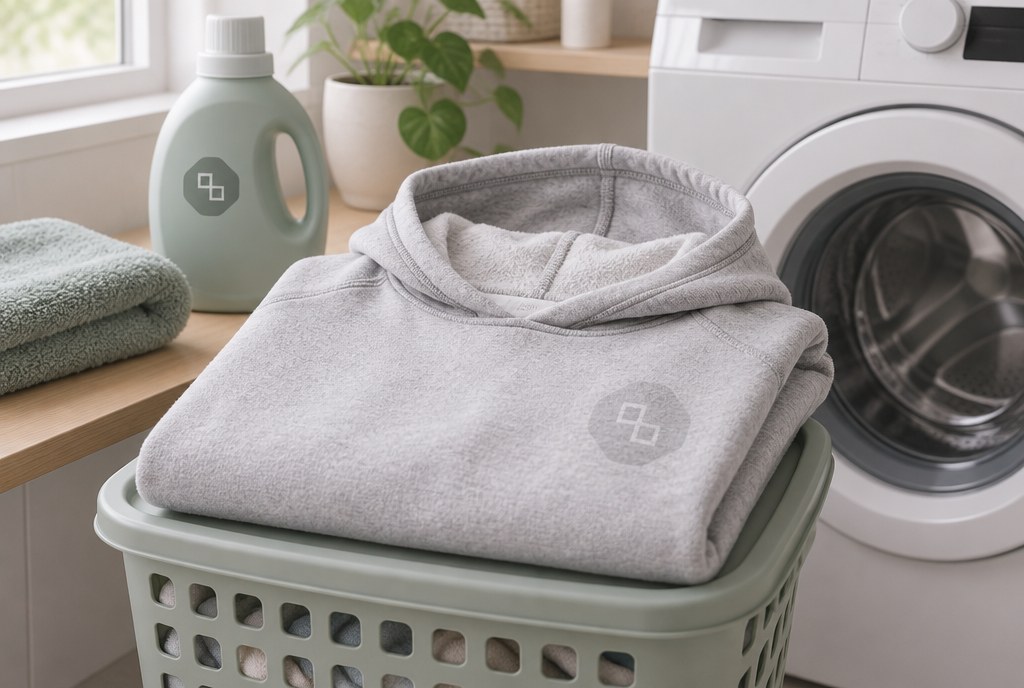
Caring for a printed hoodie comes down to four rules: wash it inside out at 30°C on a gentle cycle with a spin speed of up to 800 rpm, don't use fabric softener or bleach, dry it on a line rather than in a tumble dryer, and iron only from the inside or through baking paper. Following these conditions, screen printing and DTF transfer on a cotton hoodie withstand roughly 40–60 washes without visible changes, while embroidery lasts practically the whole lifetime of the garment. We recommend doing the first wash no sooner than 24 hours after receiving the print, so the ink and adhesive fully set.
Why printing peels off: three main reasons
In practice, most complaints about damaged printing aren't a production defect but a result of care. The most common causes:
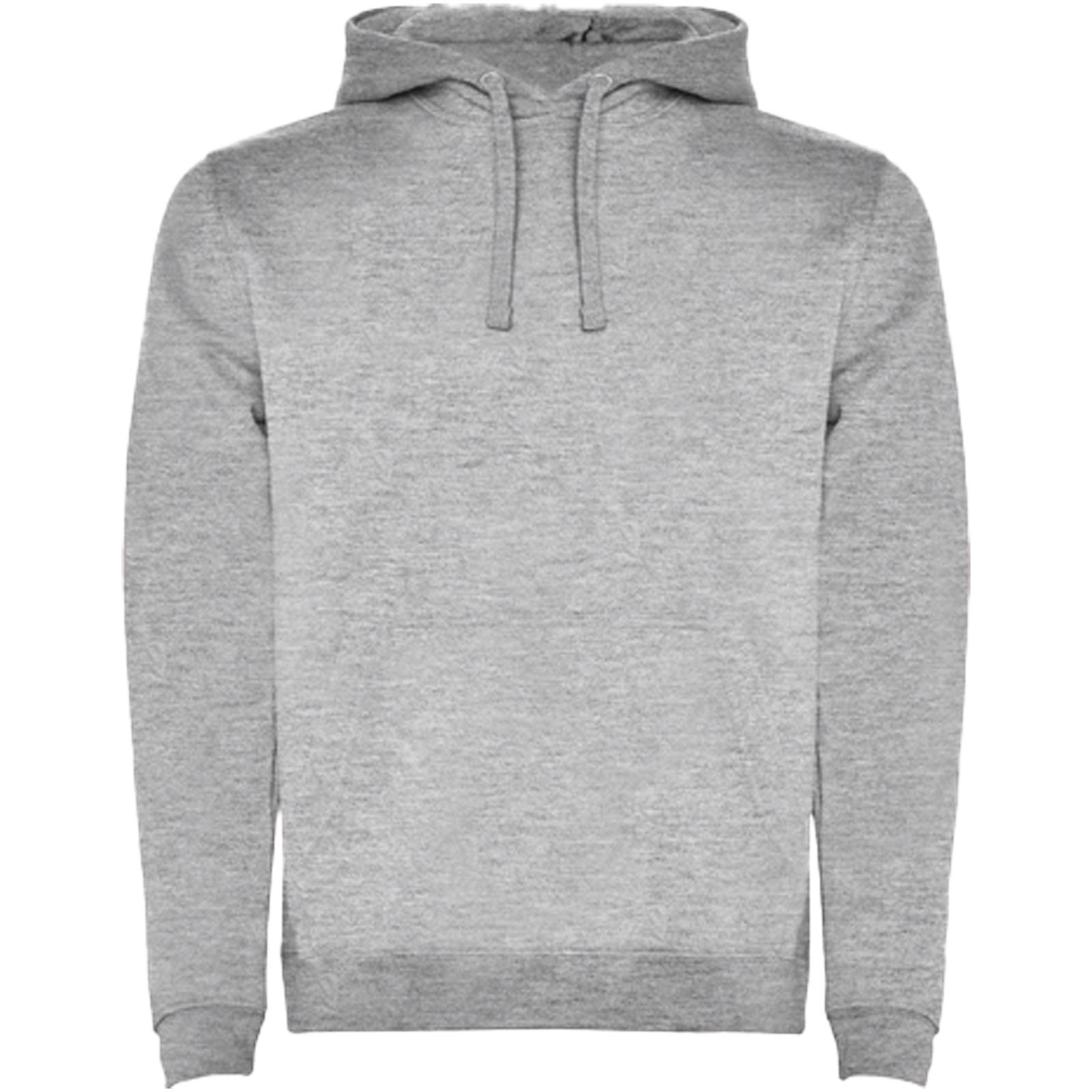
- Too high a temperature. A 60°C cycle and a tumble dryer are the main causes of DTF film cracking and screen printing turning matte. On top of that, a cotton hoodie shrinks by 3–5% at 60°C, and the print starts to wrinkle along with the fabric.
- Fabric softener. It settles on the surface of the print and weakens adhesion to the fibre – after 10–15 washes with softener, the edge of the print starts to peel, while without it the print is still flawless.
- Mechanical friction. A printed hoodie washed together with jeans, zips and towels suffers from friction. Turning it inside out and using a laundry bag solves this problem.
Washing and care table by printing method
| Printing method | Max. wash temp. | Tumble dryer | Ironing | Estimated durability |
|---|---|---|---|---|
| Screen printing (plastisol inks) | 30–40°C, gentle | Not recommended | From inside, up to 150°C | 50–60 washes |
| DTF transfer | 30°C, gentle | No | Only from inside or through baking paper | 40–50 washes |
| Embroidery | 30–40°C | Limited, low temperature | From inside, with steam | 80+ washes |
| Sublimation (polyester) | 40°C | Yes, low temperature | From inside, 140°C | Unchanged throughout the garment's lifetime |
These figures are indicative and apply to normal use; for sports club kits washed after every training session, the real lifespan is shorter.
Washing: step by step
- Close the zip, tie the hood cords and turn the hoodie inside out so the print faces inward.
- Wash it together with similar items – not with towels or clothing with hooks or metal parts.
- Select a 30°C gentle or sportswear programme, with a spin speed of up to 800 rpm.
- Use a liquid detergent for coloured fabrics. No bleach, no oxygen bleach, no fabric softener.
- Treat stains carefully and only on the fabric, not on the print; don't scrub with a brush.
- Don't soak the hoodie for several hours – prolonged soaking in water weakens the DTF film's adhesive.
What to do with a stain on the print
If a greasy substance gets onto a screen printed or DTF print, treat it with a drop of dish soap, gently pressing with a soft cloth, and rinse immediately. Don't use solvents, acetone or chlorine-based stain removers on the print – they dissolve the ink.
Drying
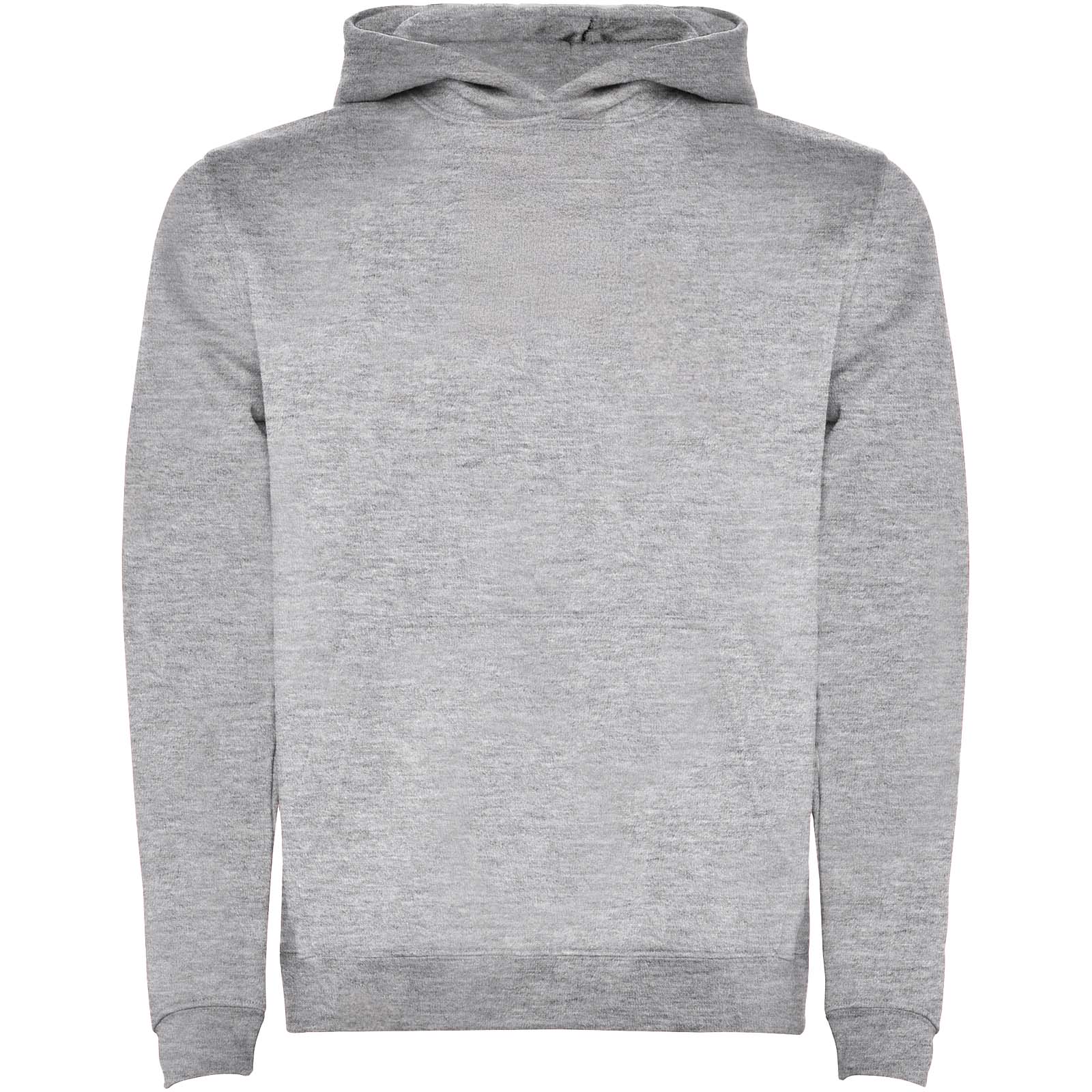
A tumble dryer is the print's main enemy, as it combines heat and friction. If you still need to use one, choose the lowest temperature and take the hoodie out while it's still slightly damp.
The best option: after washing, smooth the hoodie out by hand, place it on a flat drying rack or a wide hanger, and dry it at room temperature, away from radiators and direct sunlight. The hood dries more slowly than the rest, so plan for 8–12 hours. Don't place the hoodie on a radiator with the print facing down – localised heat above 60°C can make the DTF film sticky.
Ironing and steaming
Iron the hoodie inside out, setting the iron to the cotton mode without steam directly over the print area. If you need to smooth the printed side directly, always place baking paper or a thin cotton cloth between the iron and the print.
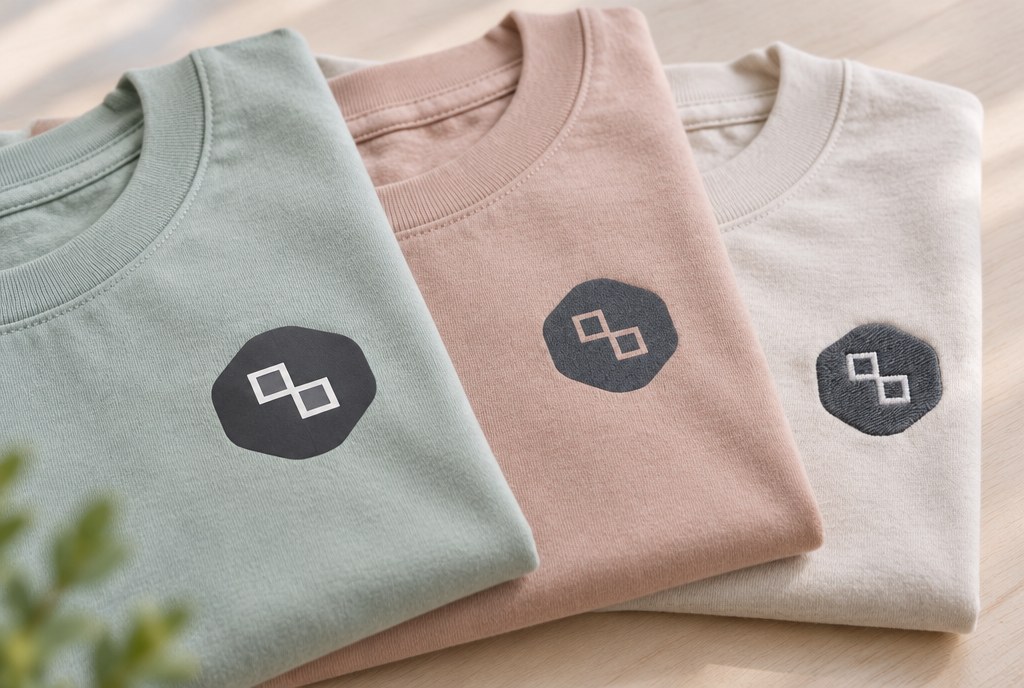
Embroidery (our standard size up to 90×90 mm) should be ironed from the inside with steam, on a soft surface, so the threads don't flatten. A steamer held 15–20 cm away is a safe alternative for all printing methods.
How the choice of printing affects durability
When ordering hoodies, you can anticipate durability already at the artwork stage. A large, dense print on the front (our standard area up to 280×210 mm) done with screen printing will last longer than the same area with DTF, because the ink soaks into the fibre. For a small logo on the left chest (110×90 mm) or on the sleeve (80×60 mm), both technologies perform equally well.
For sports clubs and work teams, where clothing is washed frequently, we usually recommend screen printing or embroidery; for multicolour photo images and small runs – DTF. For more on the technologies and standard print areas, see our garment printing section, and for models and sizes – the hoodies category.
Examples from our catalogue
A few examples from our catalogue with prices excluding printing:
- Urban 280 g/m² men's hoodie – Cotton, polyester, 36 colour options, price from EUR 11.61/pc, at 1 pc,
- Urban 280 g/m² children's hoodie – Cotton, polyester, 20 colour options, price from EUR 10.58/pc, at 1 pc,
- Arora 300 g/m² unisex hoodie – 11 colour options, price from EUR 33.56/pc, at 1 pc,
- Jasper 280 g/m² OCS organic cotton unisex hoodie – 9 colour options, price from EUR 29.70/pc, at 1 pc,
Frequently Asked Questions
How long after printing can I wash the hoodie for the first time?
For DTF transfer and screen printing, we recommend waiting at least 24 hours, ideally 48 hours. During this time the ink and adhesive fully harden, and the first wash won't damage the print.
Can a printed hoodie be washed at 60°C?
Not recommended. At 60°C, the DTF film can start cracking, screen printing loses its sheen, and the cotton hoodie itself shrinks. If a hygienic wash is needed, choose 40°C with a suitable detergent.
Why shouldn't fabric softener be used?
Softener forms a thin layer on the print and reduces adhesion to the fabric. As a result, the edges of the print start to peel much faster. A cotton hoodie stays soft even without softener if it's air-dried and not spun at maximum speed.
Can a printed hoodie be ironed directly over the print?
No. Iron from the inside or place baking paper between the iron and the print. Direct contact with the iron at 180–200°C damages both screen printing and heat transfer.
Does embroidery last longer than printing?
Yes. Embroidery (up to 90×90 mm) is physically stitched into the fabric and practically doesn't wear out, which is why it's often chosen for workwear and club kits. Just be careful with ironing directly over the threads and with hooks that can snag the loops.
Can you add care instructions to the order?
Yes. For team and club orders, upon request we prepare a short care instruction – also available as a sticker or card included with the garment.
If you're planning a hoodie order or aren't sure which printing technology will be more durable for a particular fabric, email info@attaprint.lv, call +371 25776699, or message the same number on WhatsApp. We prepare a quote with prices, print placement and timeline within one business day.
FAQ
How long after printing can I wash the hoodie for the first time?
For DTF transfer and screen printing, we recommend waiting at least 24 hours, ideally 48 hours. During this time the ink and adhesive fully harden, and the first wash won't damage the print.
Can a printed hoodie be washed at 60°C?
Not recommended. At 60°C, the DTF film can start cracking, screen printing loses its sheen, and the cotton hoodie shrinks. For a hygienic wash, choose 40°C with a suitable detergent.
Why shouldn't fabric softener be used?
Softener forms a thin layer on the print and reduces adhesion to the fabric, so the edges of the print start to peel faster. The hoodie stays soft even without softener if it's air-dried.
Can a printed hoodie be ironed directly over the print?
No. Iron from the inside or place baking paper between the iron and the print. Direct contact with the iron at 180–200°C damages both screen printing and heat transfer.
Does embroidery last longer than printing?
Yes. Embroidery up to 90×90 mm is stitched into the fabric and practically doesn't wear out, which is why it's often chosen for workwear and club kits. Just be careful with ironing directly over the threads.
Can you add care instructions to the order?
Yes. For team and club orders, upon request we prepare a short care instruction – also available as a sticker or card included with the garment.