Procurement of Promotional Products: What Municipalities and Public Institutions Should Know
A practical guide for municipalities and public institutions on preparing a promotional products procurement: thresholds, technical specifications, deadlines and indicative prices.
Procurement of promotional products by a municipality or public institution usually follows one of three routes: up to EUR 10,000 excl. VAT — as a market survey or price enquiry with 2–3 quotes; from EUR 10,000 to EUR 42,000 — as a procurement under Section 9 of the Public Procurement Law; and above EUR 42,000 — as an open tender. In practice, most souvenir and logo-printing orders fall into the first two categories, and the decisive factor isn't the procedure but the precision of the technical specification: if the material, number of print colours and size breakdown aren't stated, quotes simply aren't comparable. Below are the specific points to include in your documents, along with indicative timeframes.
Which procurement route suits your situation
Before drafting the specification, add up your whole year's plan rather than looking at individual events. If you're planning 300 T-shirts for sports games in June, 500 notebooks for schools in September and 200 mugs in December, that's a single subject matter — promotional and logo-printed products — and the sums add up together.
| Contract value (excl. VAT) | Standard procedure | What to prepare in practice |
|---|---|---|
| Up to EUR 10,000 | Market survey / price enquiry | Short brief, 2–3 quotes, email correspondence |
| EUR 10,000–42,000 | Procurement under Section 9 PPL | Terms of reference, technical specification, financial offer form |
| Above EUR 42,000 | Open tender | Full tender documentation, EIS (e-procurement system), ESPD, possibly a framework agreement |
Thresholds are reviewed periodically, so check current limits with your legal team before launching the procedure. For multi-year needs, a framework agreement for 2–3 years with a per-unit price table is more convenient — each order then becomes a simple drawdown from an already approved price list.
Technical specification: seven points that determine the price
Most disputes over delivered goods arise because the specification is missing one of the following details:
- Material and weight. For example, a cotton T-shirt — 150 or 180 g/m²; a tote bag — 100, 140 or 220 g/m².
- Printing technology. Screen printing, DTF, embroidery or sublimation. Single-colour screen printing for 300 T-shirts is cheaper than full-colour DTF, but screen printing isn't suitable for a full-colour logo.
- Number of colours and size. "Logo in 1 colour, 80 × 25 mm, on the left chest" is a verifiable requirement; "logo on T-shirt" is not.
- Size breakdown. For clothing, always specify how many pieces per size (S–3XL) and whether a women's cut is needed.
- Colour tolerances. State Pantone or CMYK values and the acceptable deviation — 100% exact colour match isn't possible in textile printing.
- Packaging and delivery. How many addresses, whether sorting by institution is needed, and whether each item must be packed separately.
- Deadline. A realistic deadline is 5–10 business days from artwork approval; 2 business days for 500 embroidered caps isn't realistic.
Don't describe one specific model
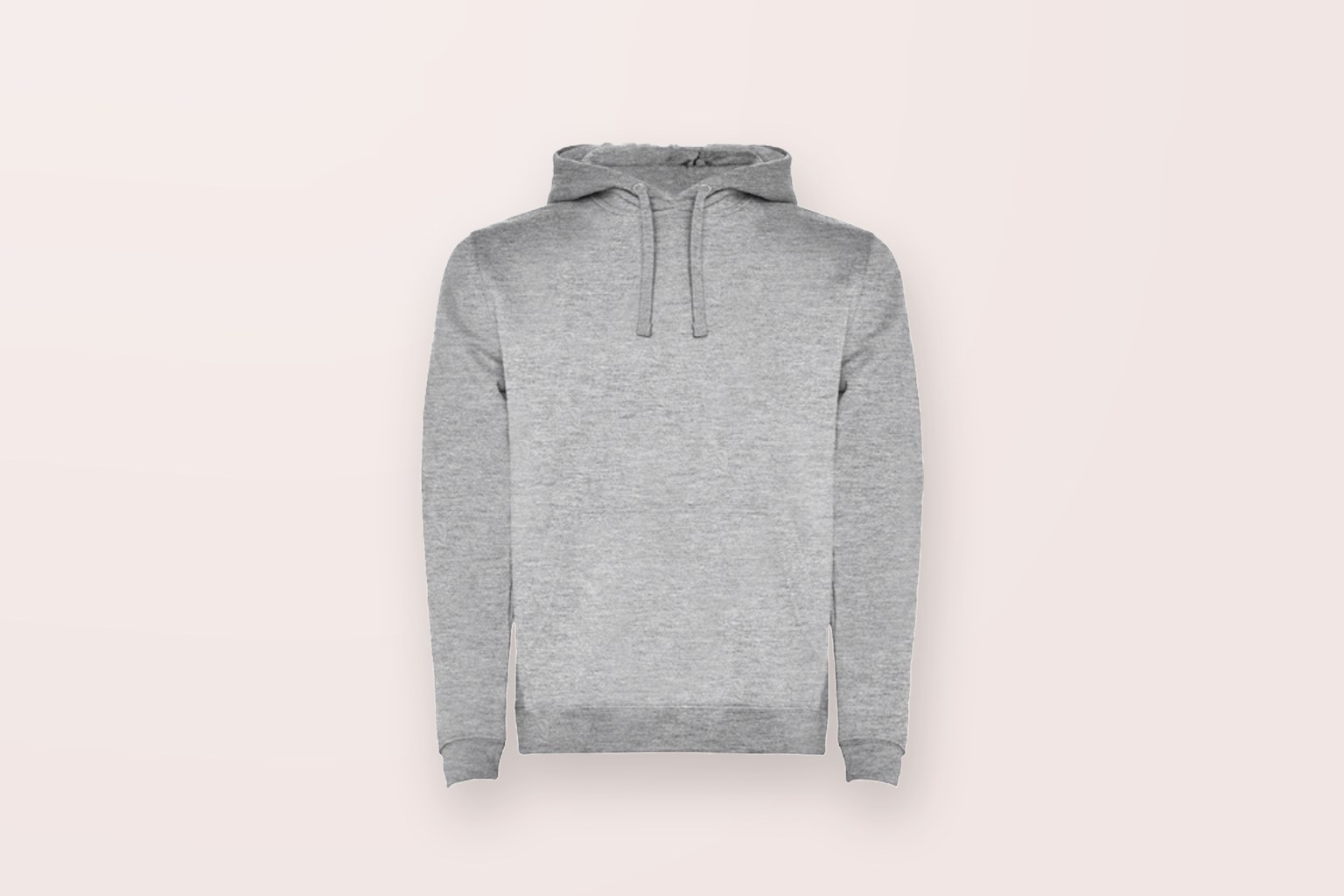
In public procurement, the specification must not point to a single manufacturer. So describe parameters, not a product name. For example, if you want a polo shirt, the requirement could be "men's short-sleeve polo shirt, 180 g/m², available in at least 20 colours." This requirement is met by our men's short-sleeve polo shirt, 180 g/m², available in a wide range of colours — this lets you match the municipality's visual identity precisely while keeping competition between suppliers open.
Indicative prices for budget planning
The prices below are indicative, excl. VAT, with single-colour printing. The exact price depends on quantity, number of print colours and model.
| Product | 50 pcs | 250 pcs | 1000 pcs |
|---|---|---|---|
| Pen with logo | from EUR 0.75 | from EUR 0.55 | from EUR 0.42 |
| A5 notebook | from EUR 2.60 | from EUR 2.10 | from EUR 1.70 |
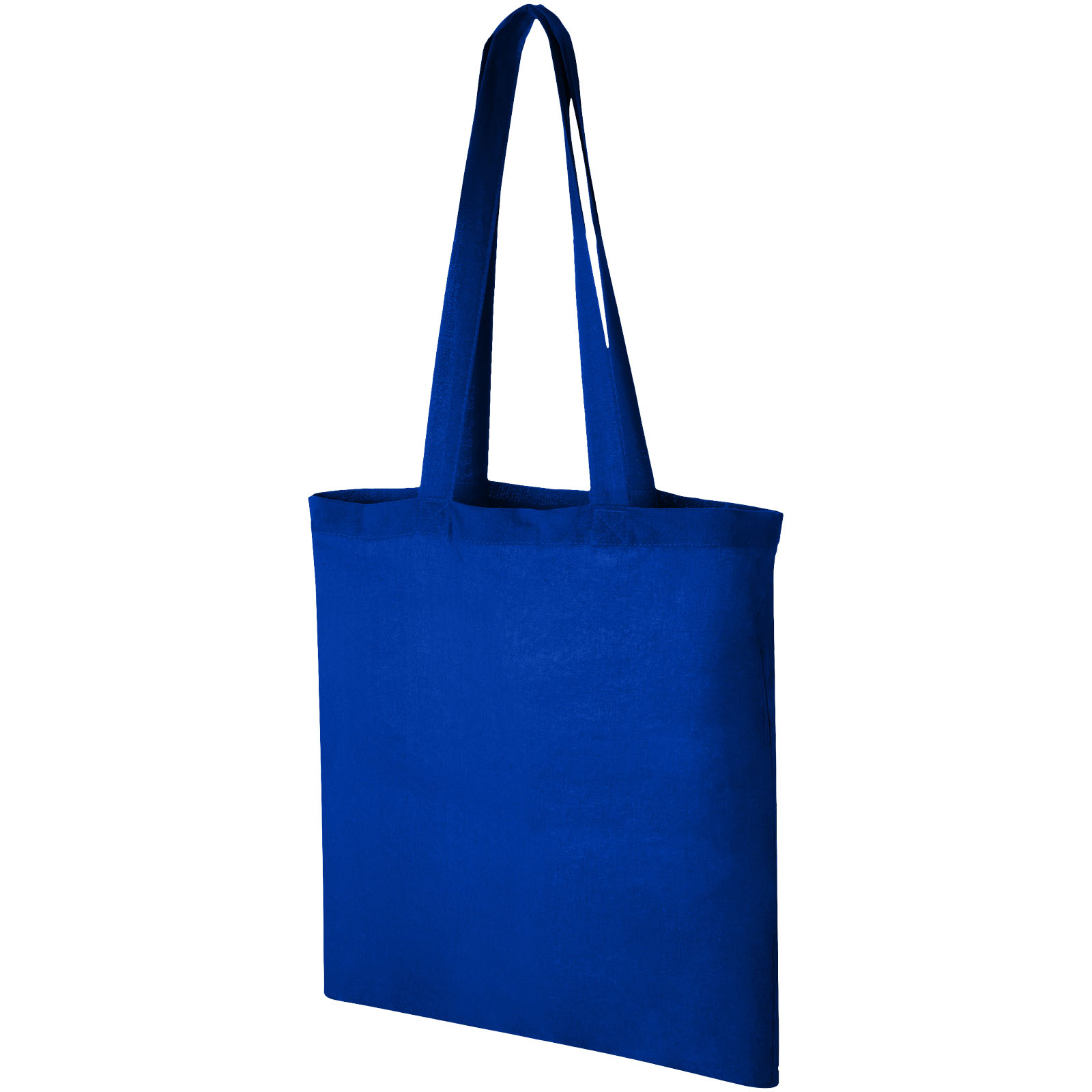
| Tote bag, 140 g/m² | from EUR 2.80 | from EUR 2.20 | from EUR 1.80 |
| Mug with print | from EUR 4.50 | from EUR 3.60 | from EUR 3.10 |
| T-shirt with screen printing | from EUR 9.50 | from EUR 7.80 | from EUR 6.50 |
| Polo shirt with embroidery | from EUR 17.00 | from EUR 14.50 | from EUR 12.80 |
| Thermal bottle 500 ml | from EUR 16.00 | from EUR 13.50 | from EUR 11.90 |
In the financial offer form, always ask for a price per unit at a specific quantity rather than a total sum — otherwise you won't be able to order a smaller batch if the budget changes. You can browse the full range in the promotional products with logo section.
Timeframes: how much time to allow
A realistic schedule for an event taking place, say, on 20 May:
- Market survey and receiving quotes: 5–10 business days.
- Decision, contract and order confirmation: 3–5 business days.
- Artwork preparation and approval: 1–3 business days.
- Production and printing: 5–10 business days depending on product and quantity; for print products (stickers, banners, posters) — 2–5 business days.
- Delivery and a buffer for the unexpected: 3 business days.
In total — roughly 4 weeks. We can handle urgent jobs by separate arrangement, but printed clothing and embroidery are harder to speed up than print products.
Files and artwork
In your procurement documents, specify the format in which the institution will provide the logo: vector graphics (.ai, .eps, .pdf), colours in CMYK or Pantone. If the municipality has a brand identity manual, attach it to the tender documentation as an annex — this prevents situations where the coat of arms is used with incorrect proportions. If no vector file exists, it can be redrawn, but allow an extra 1–2 business days for this.
For print products — diplomas, posters, stickers, business cards — a separate item table with format, paper thickness and printing sides is useful. You can check current formats and materials in the printing services section.
Frequently asked questions
Can you take part in a procurement with a single quote covering all items?
Yes. We work with print products, clothing printing and promotional products from our catalogue alike, so a single contract can combine, for example, posters, T-shirts and mugs. This usually reduces delivery costs and administrative burden.
Do you provide samples before a decision is made?
For clothing and larger souvenir orders, we prepare a sample or a print test. Allow 2–4 business days for sample preparation; if your tender documentation requires sample submission, state this clearly so all bidders can comply.
How do we handle a situation where the exact quantity isn't known yet?
Sign a contract with a minimum and maximum quantity and fixed unit prices at specific volume thresholds (for example, 50, 250 and 1000 pcs). Orders can then be placed gradually throughout the year.
Do you accept orders with deferred payment and an invoice to the institution?
Yes, we work with invoices for legal entities and budget institutions, and we agree the payment term in the contract. Any required documents — company details, tax compliance confirmations, turnover data — are submitted together with the quote.
How small a batch can we order?
We also work with orders of 1 piece, for example a single roll-up banner or a few gift mugs. Note that unit prices are considerably higher for small batches, since setup work (artwork, screen printing stencils) isn't spread over a large volume.
If you're preparing a technical specification or need a response to a price enquiry, write to info@attaprint.lv or call +371 25776699 (also WhatsApp) — our project manager Madara will help you formulate the parameters so that quotes are comparable. We prepare quotes within one business day; further information in the contacts section.
FAQ
Can you take part in a procurement with a single quote covering all items?
Yes. We work with print products, clothing printing and promotional products from our catalogue alike, so a single contract can combine, for example, posters, T-shirts and mugs. This usually reduces delivery costs and administrative burden.
Do you provide samples before a decision is made?
For clothing and larger souvenir orders, we prepare a sample or a print test. Allow 2–4 business days for sample preparation; if the tender documentation requires sample submission, state this clearly so all bidders can comply.
How do we handle a situation where the exact quantity isn't known yet?
Sign a contract with a minimum and maximum quantity and fixed unit prices at specific volume thresholds (for example, 50, 250 and 1000 pcs). Orders can then be placed gradually throughout the year.
Do you accept orders with deferred payment and an invoice to the institution?
Yes, we work with invoices for legal entities and budget institutions, and we agree the payment term in the contract. Any required documents — company details, tax compliance confirmations, turnover data — are submitted together with the quote.
How small a batch can we order?
We also work with orders of 1 piece, for example a single roll-up banner stand or a few gift mugs. Unit prices are higher for small batches, since setup work — artwork and screen printing stencils — isn't spread over a large volume.